
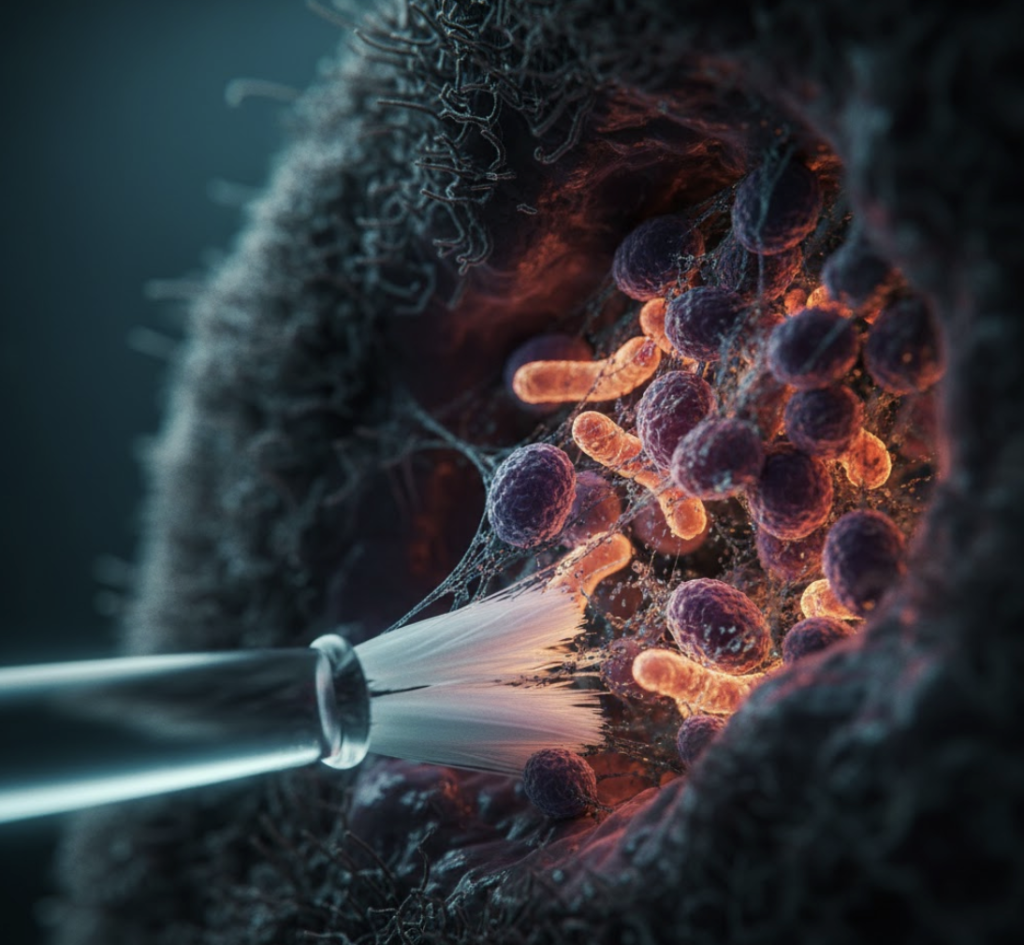
Modern oral health challenges can now be tackled with more sophisticated solutions than traditional brushing and rinsing alone. The reason we go to the hygienist, or should be going, is because the reality is clear – brushing and flossing is not enough. While mechanical cleaning remains essential, light therapy for oral health represents a revolutionary approach that addresses the microscopic bacterial communities conventional methods often miss. This breakthrough technology combines photodynamic therapy principles with targeted bacterial elimination, offering medical technology enthusiasts and biohackers a scientifically-validated path to superior oral hygiene. Understanding how dual-wavelength systems work, their clinical validation, and the precise mechanisms behind targeted plaque elimination reveals why this CE-marked innovation is transforming preventive oral care. The Lumoral system exemplifies this technological advancement, demonstrating how Finnish medical engineering can deliver professional-level results in home settings.
Why traditional oral care fails against modern bacterial challenges
Conventional brushing and mouthwash approaches face fundamental limitations when confronting sophisticated bacterial biofilms. Even the most powerful electric toothbrushes remove only approximately 65% of harmful bacteria, leaving substantial residual plaque that remains invisible to the naked eye. This persistent bacterial presence creates ongoing challenges for long-term oral health maintenance.
Traditional antiseptic mouthwashes employ broad-spectrum approaches that disrupt both harmful and beneficial oral microflora. However, this indiscriminate bacterial elimination can compromise the mouth’s natural protective mechanisms. The oral microbiome requires careful balance, but conventional products lack the precision needed for targeted intervention.
Biofilm formations present another significant challenge for mechanical cleaning methods. These microscopic bacterial communities develop protective matrices that resist standard brushing and rinsing techniques. Therefore, even meticulous oral hygiene routines often fail to address the root causes of gingivitis, periodontitis, and persistent bad breath.
The gap between mechanical cleaning effectiveness and bacterial persistence explains why many individuals experience recurring oral health issues despite consistent hygiene habits. Consequently, best oral hygiene device for deep cleaning solutions must address these microscopic bacterial challenges that traditional methods cannot reach.
How light therapy revolutionises antibacterial treatment mechanisms
Photodynamic therapy principles create targeted bacterial inactivation through precise wavelength application. The 405nm blue light spectrum delivers direct antibacterial effects by disrupting bacterial cellular processes, while 810nm near-infrared light provides photobiomodulation support for healthy tissue function. This dual approach ensures comprehensive treatment without compromising beneficial oral bacteria.
The photochemical processes involved create selective targeting capabilities that distinguish harmful plaque bacteria from protective oral microflora. When light-sensitive compounds bind specifically to bacterial biofilms, subsequent light activation generates localised antibacterial effects. This precision represents a fundamental advancement over broad-spectrum antimicrobial approaches.
Unlike conventional treatments that rely on chemical disruption, photodynamic therapy works through controlled energy transfer. The process eliminates up to 99.998% of harmful plaque bacteria whilst maintaining the delicate balance of beneficial microorganisms essential for oral health. This selectivity addresses the primary limitation of traditional antiseptic treatments.
The mechanism’s effectiveness stems from its ability to penetrate biofilm matrices that resist mechanical cleaning. Therefore, light-activated treatments can reach bacterial communities in areas where brushing and flossing prove insufficient, creating comprehensive antibacterial coverage throughout the oral cavity.
The dual-wavelength advantage in oral health technology
Combined 405nm and 810nm wavelengths create synergistic therapeutic outcomes through complementary mechanisms. The blue light spectrum provides direct bacterial elimination, whilst near-infrared wavelengths support gingival tissue health and healing processes. This technical combination addresses both immediate bacterial threats and long-term tissue wellness.
The 405nm wavelength specifically targets bacterial porphyrins, creating photochemical reactions that disrupt cellular function in harmful microorganisms. Simultaneously, 810nm light promotes cellular regeneration and reduces inflammation in surrounding tissues. How to prevent cavities naturally becomes achievable through this dual-action approach that supports the mouth’s natural healing mechanisms.
Photobiomodulation effects from near-infrared light enhance tissue oxygenation and cellular metabolism in gingival areas. This process supports natural healing whilst the antibacterial wavelength eliminates pathogenic bacteria. The combination creates an optimal environment for oral health restoration and maintenance.
The technological advantage lies in simultaneous delivery through LED arrays that ensure consistent light distribution. Each treatment session provides both bacterial elimination and tissue support, creating comprehensive therapeutic benefits that single-wavelength systems cannot achieve. This dual approach represents a significant advancement in home-based oral health technology.
Clinical evidence supporting photodynamic oral therapy effectiveness
Randomised controlled trials demonstrate significant improvements in key periodontal health indicators. The HOPE-CP study and other clinical investigations show quantified reductions in bleeding on probing, decreased pocket depth formation, and enhanced outcomes when photodynamic therapy supplements conventional periodontal treatment.
Clinical validation data reveals substantial improvements in gingival health parameters within weeks of treatment initiation. Patients demonstrated reduced inflammation markers, decreased bacterial loads, and improved overall periodontal stability. These measurable outcomes provide evidence-based support for light-activated antibacterial therapy effectiveness.
Comparative studies show superior biofilm control compared to conventional antiseptic treatments. The selective bacterial elimination preserves beneficial oral microflora whilst effectively reducing pathogenic species associated with gingivitis and periodontitis. This precision creates better long-term oral health outcomes than broad-spectrum approaches.
Research demonstrates sustained antibacterial effects that extend beyond immediate treatment periods. Regular photodynamic therapy applications create cumulative benefits, with bacterial populations remaining suppressed for extended periods. Therefore, clinical evidence supports both immediate efficacy and long-term preventive benefits for comprehensive oral health management.
What makes indocyanine green essential for targeted light activation
Indocyanine green (ICG) serves as a critical light-sensitive dye with selective binding properties for plaque bacteria. This medical-grade compound, utilised in healthcare for over 70 years, demonstrates exceptional safety and precision in creating localised antibacterial effects. ICG’s molecular structure allows specific adhesion to bacterial biofilms whilst leaving healthy oral tissues unaffected.
The activation mechanism relies on ICG’s photosensitive properties when exposed to specific wavelengths. Upon light activation, the compound generates reactive oxygen species that create targeted bacterial elimination. This process occurs exclusively where ICG has bound to plaque, ensuring precise treatment without affecting beneficial oral bacteria or healthy tissues.
ICG’s established safety profile includes extensive medical use in diagnostic procedures and surgical applications. The compound is not absorbed through the digestive tract, making accidental ingestion harmless. This safety characteristic, combined with its targeted action, makes ICG ideal for regular home-based oral health treatments.
The precision of ICG binding creates microscopic-level targeting that conventional antiseptics cannot achieve. This selectivity explains why light-activated treatments can eliminate harmful bacteria whilst preserving the oral microbiome’s beneficial components. Therefore, ICG represents an essential component in advanced photodynamic oral therapy systems, enabling safe and effective bacterial control for optimal oral health maintenance.

