
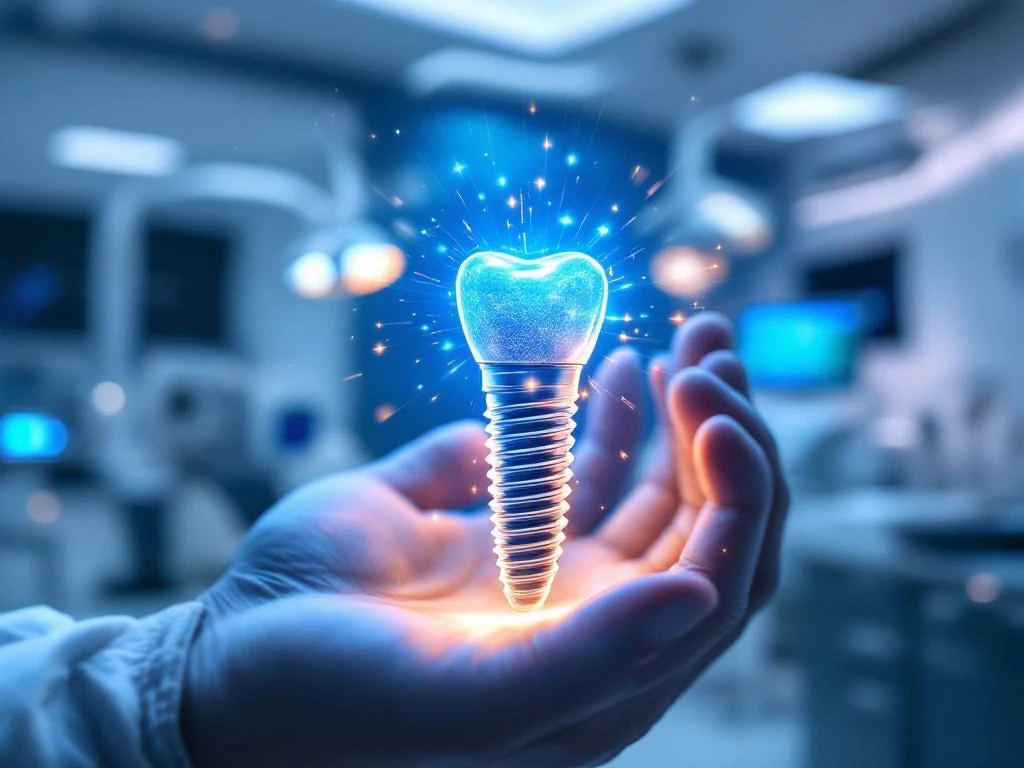
Dental implants represent one of modern dentistry’s greatest achievements, offering patients a permanent solution for missing teeth. Yet despite their success, maintaining healthy tissue around implants remains a significant challenge. Traditional implant care methods, while foundational, often struggle to address the complex bacterial environment that threatens implant longevity. The emergence of light-activated therapy is changing this landscape, offering dental professionals and patients a scientifically advanced approach to implant care that goes beyond conventional mechanical cleaning.
This breakthrough technology addresses the root cause of peri-implant complications through targeted bacterial reduction while supporting healthy gum tissue. By combining photodynamic therapy with photobiomodulation, this Finnish medical innovation provides a comprehensive solution that integrates naturally into existing dental workflows.
Why traditional implant care methods fall short
Conventional implant care relies heavily on mechanical plaque removal through brushing, flossing, and professional cleaning. While these methods remain essential, they face inherent limitations that can compromise long-term implant success. Patient compliance represents the most significant challenge, with studies showing that many patients struggle to maintain adequate oral hygiene around complex prosthetic structures.
Access limitations around implant sites create additional complications. Traditional cleaning tools often cannot effectively reach bacterial biofilms that accumulate in the unique contours around implant abutments and prosthetic components. This inadequate biofilm removal contributes to rising peri-implant complication rates, with peri-implantitis affecting up to 22% of patients within five to ten years post-placement.
Standard periodontal protocols, while effective for natural teeth, must be adapted for implant maintenance. The absence of periodontal ligament around implants means that bacterial invasion can progress more rapidly to the bone level, making prevention absolutely critical rather than reactive treatment.
How Lumoral’s dual-light technology revolutionizes implant maintenance
Lumoral combines four distinct technological effects to create a comprehensive approach to implant care. The photobiomodulation effect uses 810 nm near-infrared light to stimulate mitochondria in gum tissue cells, increasing ATP production and promoting tissue healing while reducing inflammation around implant sites.
The photothermal effect occurs when indocyanine green, a light-sensitive dye used safely in medicine since the 1950s, binds specifically to bacterial biofilm. When activated by 810 nm light, this dye converts light energy into heat, breaking down biofilm structure and bacterial cell membranes while stimulating beneficial saliva secretion.
Photodynamic therapy works synergistically with the photothermal effect. The same indocyanine green dye produces reactive oxygen species under light activation, providing additional antibacterial action that penetrates biofilm structures effectively.
The 405 nm antibacterial blue light activates bacteria’s own natural dyes, enhancing the effectiveness of both photothermal and photodynamic treatments. This multimodal approach targets plaque bacteria while supporting healthy gum tissue around implants without disrupting beneficial oral microflora to the same extent as broad-spectrum antiseptics.
Clinical benefits for implant-ready tissue preparation
Clinical evidence demonstrates that light-activated therapy accelerates patient progress toward implant-ready soft tissues. The technology helps reduce bleeding on probing to clinically acceptable levels, typically below 20% of sites, which is crucial for successful implant placement and long-term stability.
During critical healing phases, maintaining tissue stability becomes paramount. Light-activated therapy supports soft-tissue health when mechanical cleaning is limited, such as immediately post-surgery or around complex prosthetic designs. This support proves particularly valuable for high-risk patients who may struggle with conventional oral hygiene methods.
The treatment protocol’s simplicity enhances patient compliance significantly. Patients rinse with the light-activated solution for 60 seconds, activate with the mouthpiece device for 10 minutes, then brush their teeth normally. For healthy mouths, usage approximately every fourth day maintains optimal results, with more frequent applications recommended for at-risk patients.
Integrating light-activated therapy into existing dental workflows
Implementation of light-activated therapy as an adjunct to standard protocols requires minimal workflow modification. Dental professionals can prescribe the system for home use between visits while monitoring traditional parameters including bleeding, pocket depths, and peri-implant status during regular recall appointments.
The Lumoral Starter Kit provides everything needed for effective home treatment. Patient education focuses on the simple three-step protocol, making it accessible for patients of varying ages and dexterity levels. This ease of use significantly improves compliance compared with complex interdental cleaning regimens.
Recall scheduling integrates naturally with existing periodontal and implant review appointments. Practitioners can assess treatment effectiveness through standard clinical measurements while adjusting usage frequency based on individual patient response and risk factors.
What makes Finnish medical innovation resistant to bacterial adaptation
Unlike antibiotic treatments that target specific bacterial pathways, light-activated therapy works through fundamental physical processes that bacteria cannot adapt to resist. The technology targets bacteria’s natural cellular structures, making resistance development impossible through conventional genetic mutation pathways.
The indocyanine green activation process disrupts biofilm through multiple simultaneous mechanisms, including heat generation, reactive oxygen production, and direct cellular membrane damage. This multitarget approach means bacteria would need to fundamentally alter their basic cellular structure to develop resistance, which is biologically impossible while maintaining viability.
This resistance-proof characteristic represents a significant advantage over traditional antimicrobial approaches, ensuring long-term effectiveness for implant care without contributing to broader antimicrobial resistance concerns in healthcare.
Advanced light-activated therapy represents a paradigm shift in implant care, addressing the limitations of traditional methods through scientifically proven technology. By combining targeted bacterial reduction with tissue support, this approach offers dental professionals and patients a reliable tool for maintaining implant health. The integration of such innovation into standard care protocols promises improved outcomes and enhanced patient satisfaction in implant dentistry. For more information about this breakthrough technology, visit Lumoral’s comprehensive resource center.

