
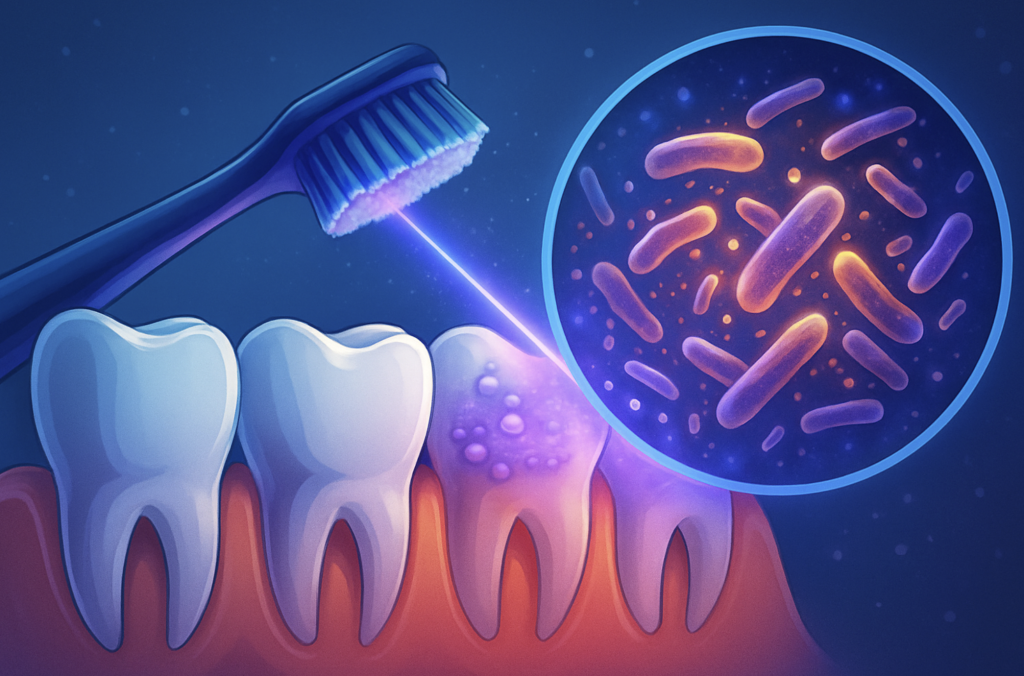
You brush twice daily, floss religiously, and even splurge on professional deep cleanings every six months. Your teeth look spotless in the mirror, and your dentist gives you the thumbs up. But here’s what neither of you can see with the naked eye: microscopic plaque bacteria thriving in biofilms that traditional cleaning methods simply cannot reach. In this article we want to highlight how deep cleaning your mouth is now possible with new technology.
These invisible colonies aren’t just hiding from your toothbrush, they’re actively driving the very diseases you’re trying to prevent. Understanding why conventional oral hygiene falls short at the microscopic level reveals why advanced approaches like photodynamic therapy are becoming essential for comprehensive oral health.
Why traditional deep cleaning misses microscopic plaque
Even the most meticulous brushing technique removes only 65% of plaque from your teeth. This limitation isn’t about poor technique or inadequate tools, it’s about the fundamental nature of bacterial biofilms and the mechanical constraints of conventional cleaning methods.
Plaque bacteria don’t simply sit on tooth surfaces waiting to be swept away. They form sophisticated biofilms, protective communities where bacteria embed themselves in a self-produced matrix of proteins and sugars. This microscopic architecture creates a barrier that shields bacteria from mechanical disruption, allowing them to persist even after thorough brushing and flossing.
Professional dental cleanings using scaling and root planing can remove visible tartar and surface plaque, but these mechanical approaches still struggle with biofilm penetration. The bacteria operate at cellular levels, colonising areas between teeth, along the gum line, and in microscopic crevices that dental instruments cannot effectively access. These persistent infection sources continue producing acids and toxins, maintaining inflammation even when your mouth appears clinically clean.
Traditional antiseptic mouthwashes attempt to address this limitation but create their own problems. They indiscriminately eliminate both harmful and beneficial oral bacteria, disrupting the natural microflora balance essential for oral health. This broad-spectrum approach can actually create conditions for more aggressive bacterial strains to establish dominance.
Microscopic plaque drives the diseases you fear most
Research reveals that maintaining healthy oral bacteria balance is as crucial for overall health as getting sufficient sleep. The microscopic plaque bacteria that escape conventional cleaning don’t remain localised in your mouth, they become systemic health threats through well-documented pathogenic mechanisms.
Cardiovascular disease represents one of the most serious consequences of microscopic plaque bacteria. These pathogens enter the bloodstream through inflamed gums, causing inflammation in artery walls that contributes to heart disease, bacterial infection of heart valves, and increased risk of myocardial infarction. The bacteria’s ability to trigger systemic inflammation creates a direct pathway from oral infection to cardiovascular complications.
Brain health suffers significantly from uncontrolled microscopic plaque. Oral bacteria can cross the blood-brain barrier, contributing to inflammation and blood vessel constriction that increases stroke risk and accelerates cognitive decline. Studies show that untreated gingivitis doubles stroke risk in people under 50, whilst the chronic inflammation from persistent oral bacteria contributes to Alzheimer’s disease development through neuroinflammatory pathways.
The diabetes connection operates as a dangerous two-way relationship. High blood sugar levels increase oral inflammation and impair periodontal healing, whilst periodontal disease affects diabetes management by disrupting blood sugar control. This creates a cycle where microscopic plaque bacteria exacerbate both conditions simultaneously, reflected in elevated systemic inflammatory markers throughout the body.
Digestive health begins in the mouth, where bacterial dysbiosis from microscopic plaque affects the entire gut microbiome. For individuals with inflammatory bowel disease, Crohn’s disease, or other digestive disorders, uncontrolled oral bacteria significantly impact overall gastrointestinal health and treatment outcomes.
Deep cleaning your mouth: photodynamic therapy targets what brushing cannot reach
Photodynamic therapy represents a precision approach to eliminating microscopic plaque bacteria through light-activated antimicrobial action. This technology uses specific wavelengths combined with photosensitising agents to create targeted bacterial destruction at the cellular level, addressing the biofilm penetration problem that limits mechanical cleaning methods.
The process works through selective bacterial targeting. Photosensitising compounds, such as indocyanine green (used safely in medicine since the 1950s), bind preferentially to plaque bacteria rather than healthy tissue. What this means is that you rinse with this green substance that attaches to the bacteria on teeth and even in between gums. When activated by specific light wavelengths, these compounds generate reactive oxygen species that destroy bacterial cell walls and disrupt biofilm structure. Advanced systems incorporate dual-wavelength technology, combining 405 nm blue light (for direct antibacterial action) with near-infrared wavelengths (810 nm) that support tissue healing through photobiomodulation. This combination of shooting light dual light at the green substance (attached to the plaque bacteria) also creates heat, resulting in extremely effective thermal therapy. This new technology and approach not only eliminates microscopic plaque bacteria but also promotes gingival tissue health and reduces inflammation, addressing both the infectious and inflammatory components of oral disease.
This precision targeting allows photodynamic therapy to eliminate harmful bacteria whilst preserving beneficial oral microflora. Unlike broad-spectrum antiseptics, the light-activated treatment affects only the bacteria that have absorbed the photosensitising agent, maintaining the delicate balance of healthy oral bacteria essential for immune function and oral health.
The treatment protocol is remarkably simple: a photosensitising rinse followed by light activation, then conventional brushing. This sequence allows the light therapy to target microscopic bacteria that brushing alone cannot reach, whilst the mechanical cleaning removes disrupted biofilm debris. Now you can take your oral care to a whole new level, giving you the ultimate technology for overall well being.
However not all light therapy delivers clinical-grade results
The growing popularity of light therapy in oral care has led to numerous consumer devices claiming antimicrobial benefits, but significant differences exist between evidence-based clinical systems and basic LED devices. Understanding these distinctions is crucial for achieving effective microscopic plaque elimination.
Wavelength specificity determines therapeutic efficacy. Clinical-grade photodynamic therapy requires precise 405 nm blue light for optimal antibacterial action, combined with appropriate power density to ensure adequate photon delivery to target tissues. Many consumer devices use broader spectrum LEDs or incorrect wavelengths that lack the specificity needed for effective bacterial inactivation.
Photosensitiser integration represents another critical factor distinguishing clinical systems from basic light devices. Effective photodynamic therapy requires pharmaceutical-grade photosensitising agents formulated for optimal bacterial binding and light activation. Systems without proper photosensitiser protocols cannot achieve the selective bacterial targeting that makes this approach superior to conventional antimicrobial treatments.
Clinical validation through randomised controlled trials provides the evidence base necessary to distinguish effective systems from marketing claims. Studies like the HOPE-CP trial demonstrate measurable improvements in bleeding on probing, reduced deep pocket formation, and enhanced outcomes when photodynamic therapy is added to conventional periodontal treatment.
CE marking for medical devices ensures that light therapy systems meet stringent safety and efficacy standards for therapeutic use. This regulatory approval indicates comprehensive testing for both safety parameters and clinical effectiveness, distinguishing medical-grade devices from wellness products or cosmetic applications.
Treatment protocol development based on clinical research ensures optimal outcomes. Evidence-based systems provide specific guidance on usage frequency, treatment duration, and integration with conventional oral hygiene practices. For healthy individuals, treatments approximately every fourth day maintain optimal bacterial balance, whilst at-risk patients may require more frequent applications based on clinical assessment.
The microscopic plaque bacteria that drive serious oral and systemic diseases require more than conventional cleaning can provide. Photodynamic therapy offers a scientifically validated approach to targeting these hidden threats, but only when implemented through clinically proven systems with proper wavelength specificity, pharmaceutical-grade photosensitisers, and evidence-based protocols. By addressing the limitations of traditional oral hygiene at the microscopic level, this technology represents a significant advancement in preventive oral care and overall health protection.

