
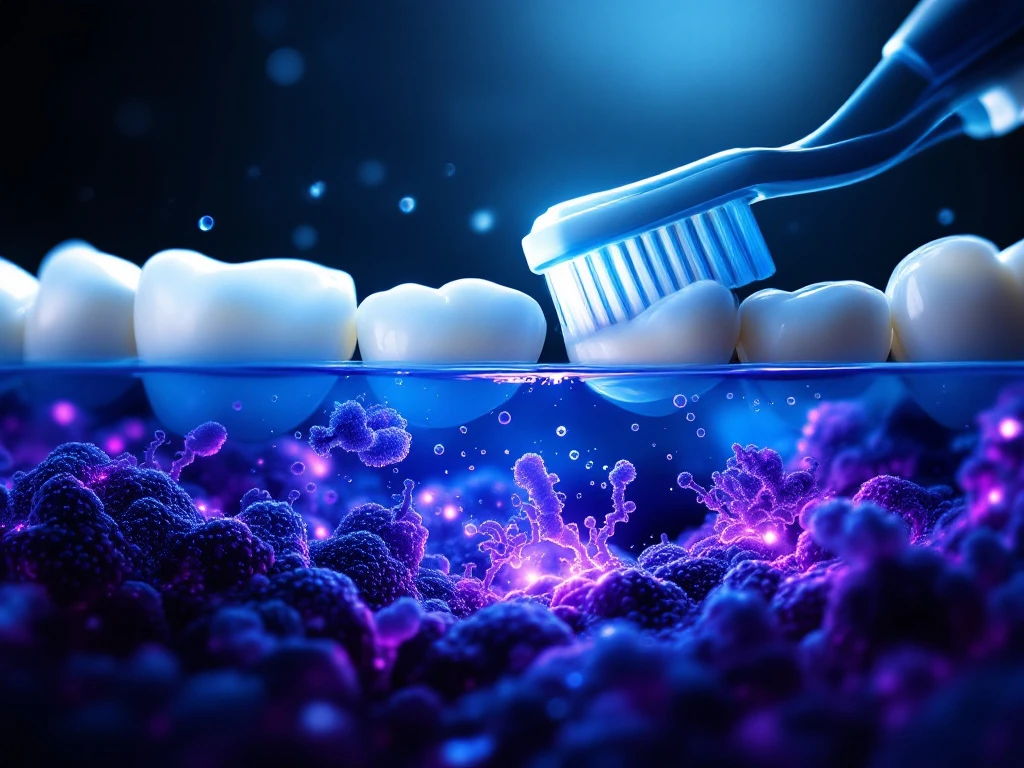
In the age of modern dentistry, we’ve mastered space travel and artificial intelligence, yet millions still suffer from preventable oral diseases. The culprit? Bacterial biofilm — microscopic fortresses that shield harmful bacteria from our daily brushing routine. These invisible communities of microorganisms create protective barriers that render traditional oral hygiene surprisingly ineffective, leaving even the most diligent brushers vulnerable to gum disease, tooth decay, and the cascade of health problems that follow.
Understanding why your toothbrush fails against these bacterial strongholds isn’t just academic curiosity — it’s the key to achieving true gum disease prevention. When we grasp how these microscopic communities operate, we can finally address the root cause of oral disease rather than merely managing its symptoms.
What makes bacterial biofilms invisible fortresses?
Imagine bacteria as individual soldiers who, when threatened, band together to build an impenetrable castle. This castle is the biofilm — a sophisticated three-dimensional structure that transforms harmless individual bacteria into a formidable community. The secret weapon? A self-produced extracellular matrix that acts like a protective shield made of proteins, sugars, and DNA.
This matrix isn’t just a simple barrier — it’s an intelligent defence system. The slimy coating deflects antimicrobial agents, blocks mechanical removal attempts, and even facilitates communication between bacteria through chemical signals. Within this fortress, bacteria coordinate their activities, share nutrients, and collectively resist threats that would easily eliminate them in isolation.
The biofilm matrix can be up to 1,000 times more resistant to antimicrobial agents than individual bacteria, making it nature’s most effective bacterial protection system.
What makes these biofilms particularly insidious is their ability to remain virtually invisible to the naked eye whilst harbouring millions of bacteria. They form complex channels that deliver nutrients and remove waste, creating a thriving ecosystem that can persist for months if left undisturbed.
How do plaque colonies establish at the gum line?
The colonisation process begins within minutes of cleaning your teeth. Early colonising bacteria like Streptococcus species attach to the tooth surface using specialised adhesion molecules. These pioneer bacteria create the foundation for what will become a mature plaque biofilm.
The gum line provides the perfect environment for bacterial settlement — it’s protected from the mechanical action of chewing, offers a steady supply of nutrients from gingival fluid, and maintains the warm, moist conditions bacteria crave. As the initial colonisers multiply, they release chemical signals that attract secondary colonisers, including more aggressive species like Porphyromonas gingivalis and Fusobacterium nucleatum.
This bacterial succession follows a predictable pattern. First, the surface becomes conditioned with proteins from saliva. Then, primary colonisers attach and multiply. Within days, the biofilm matures as late colonisers join the community, creating a complex ecosystem with distinct layers and specialised bacterial neighbourhoods. Each species plays a specific role — some produce the protective matrix, others generate acids that damage teeth, and some trigger inflammatory responses in gum tissue.
The most concerning aspect of this process is how quickly it occurs. Studies show that even after professional cleaning, bacterial communities can re-establish within 24-48 hours, making consistent disruption essential for oral health.
Why traditional brushing fails against mature biofilms
Here lies the fundamental flaw in conventional oral hygiene: toothbrush bristles can only access surface bacteria, leaving the protected communities beneath largely untouched. Research reveals that even the most powerful electric toothbrushes remove only about 65% of harmful bacteria, allowing 35% to remain safely ensconced within their biofilm fortresses.
The mechanical limitations are stark. Bristles, no matter how advanced, cannot penetrate the sticky extracellular matrix that shields bacteria. It’s like trying to remove barnacles from a ship’s hull with a feather duster — the surface might look cleaner, but the underlying problem persists.
Mature biofilms employ several protective mechanisms that confound traditional cleaning methods. The matrix acts as a diffusion barrier, preventing cleaning agents from reaching bacteria in deeper layers. Some bacteria within the biofilm enter a dormant state, making them less susceptible to mechanical disruption. Additionally, the three-dimensional structure creates protected niches where bacteria can survive even aggressive brushing.
This explains why people can maintain seemingly excellent oral hygiene yet still develop persistent bad breath, bleeding gums, and progressive gum disease. The visible plaque removal creates an illusion of cleanliness whilst bacterial communities continue thriving in their microscopic sanctuaries.
Modern solutions like light-activated treatments represent a paradigm shift, targeting bacteria within biofilms through mechanisms that penetrate the protective matrix. These approaches can eliminate up to 99.998% of harmful plaque bacteria whilst preserving beneficial oral flora — a precision that mechanical cleaning simply cannot achieve.

Lumoral, the safe way to disrupt biofilm and get bacterial balance in mouth – scientifically proven in EUs largest periodontal study HOPE-CP.
The systemic health consequences of biofilm persistence
The mouth serves as the gateway to the body, and persistent biofilms don’t respect this boundary. When gum tissue becomes inflamed due to bacterial toxins, it creates pathways for bacteria to enter the bloodstream — a process called bacteraemia. This bacterial translocation transforms a local oral problem into a systemic health threat.
The inflammatory cascade triggered by biofilm bacteria extends far beyond the mouth. Chronic inflammation from gum disease has been linked to cardiovascular disease, with oral bacteria found in arterial plaques. The connection to diabetes is bidirectional — gum disease worsens blood sugar control, whilst diabetes increases susceptibility to periodontal infection.
Perhaps most concerning are the emerging links between oral biofilms and cognitive health. Research suggests that inflammatory mediators from gum disease may contribute to neuroinflammation associated with memory impairment and neurodegenerative conditions. The bacteria don’t need to travel to cause damage — the inflammatory response they trigger can have distant effects throughout the body.
At least 70% of people live with ongoing gum infections that can spread throughout the body, creating systemic inflammation linked to serious conditions like heart disease, diabetes, and cognitive decline.
This systemic impact underscores why effective biofilm management isn’t just about oral health — it’s about protecting your entire body from chronic inflammation. Traditional approaches that leave biofilms partially intact perpetuate this inflammatory burden, whilst comprehensive biofilm disruption can reduce systemic inflammatory markers.
The solution lies in understanding that biofilms require targeted intervention beyond mechanical cleaning. By addressing these bacterial fortresses at their foundation, we can finally break the cycle of chronic oral infection and its far-reaching health consequences. The future of oral health isn’t just about stronger brushes or more frequent cleaning — it’s about precision targeting of the bacterial communities that have evaded our efforts for too long.

