
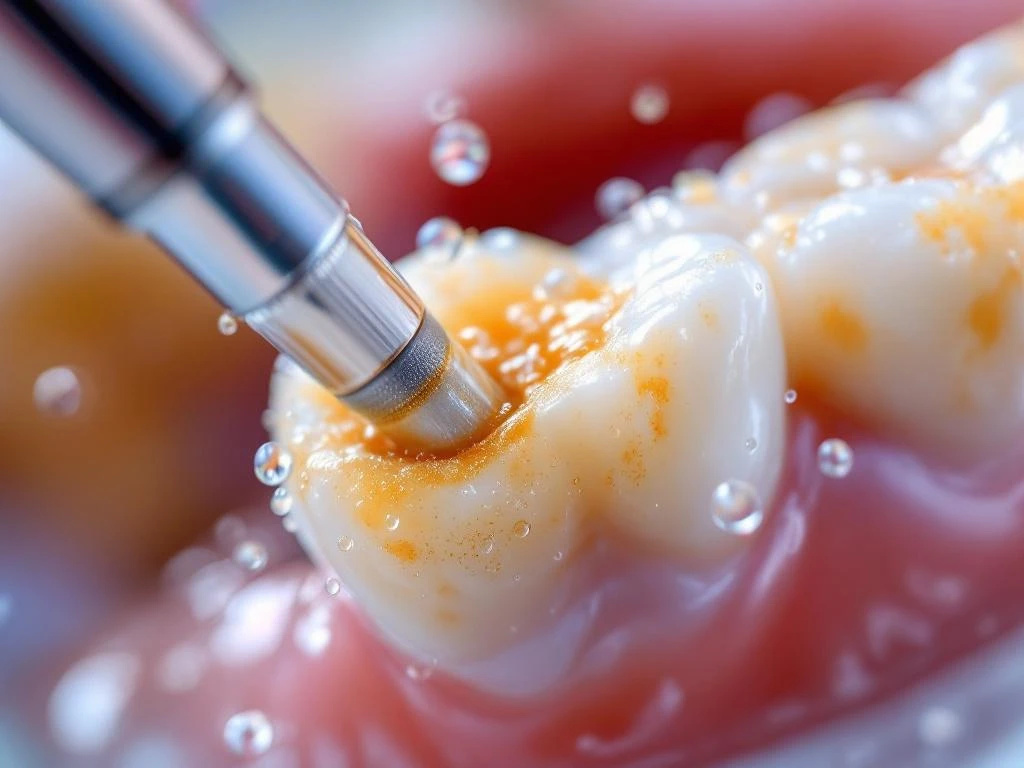
If your dentist has recommended a deep cleaning, you’re not alone. This common dental procedure, also called scaling and root planing, helps millions of people maintain healthy gums every year. When regular cleanings aren’t enough to address plaque and bacterial buildup below the gumline, deep cleaning becomes a necessary step to prevent more serious periodontal complications.
This comprehensive guide explains what dental deep cleaning involves, why it’s recommended, and how you can support your periodontal health between professional treatments. Understanding this periodontal treatment will help you make informed decisions about your oral health care.
Understanding what deep cleaning really means
Dental deep cleaning differs significantly from your routine six-month cleaning appointments. While regular cleanings focus on removing plaque and tartar from tooth surfaces above the gumline, deep cleaning addresses bacterial buildup that has accumulated in the spaces between your gums and teeth, called periodontal pockets.
The procedure involves two main components: scaling and root planing. Scaling removes tartar and bacteria from tooth surfaces and below the gumline using specialized instruments, lasers, or ultrasonic devices. Root planing smooths the root surfaces to discourage further bacterial buildup and promote proper healing of the gum tissue.
Your dentist recommends this treatment when pocket depths between your gums and teeth measure deeper than 4 millimetres. In healthy mouths, these pockets typically measure between 1 and 3 millimetres. Pockets deeper than 5 millimetres are difficult to manage with oral care alone, making professional deep cleaning important for preventing further disease progression.
Why plaque and bacteria build up below the gumline
Bacterial colonization below the gumline begins with the formation of dental biofilm, a sticky matrix that allows harmful bacteria to adhere to tooth surfaces and multiply. When plaque remains on teeth for extended periods, it hardens into tartar, creating rough surfaces that make bacterial attachment even easier.
This bacterial accumulation triggers your body’s inflammatory response, causing gum tissue to swell and pull away from teeth. As inflammation progresses, deeper pockets form between gums and teeth, creating protected spaces where bacteria can thrive without being disturbed by regular brushing or flossing.
The bacteria in these deep pockets produce toxins that further irritate gum tissue and break down the structures supporting your teeth. This process creates a cycle in which inflammation leads to deeper pockets, which harbour more bacteria, resulting in increased inflammation and periodontal disease progression.
What happens if periodontal disease goes untreated
Periodontal disease progresses through distinct stages, beginning with gingivitis and potentially advancing to severe periodontitis. Gingivitis, characterised by red, swollen, and bleeding gums, can often be reversed with professional treatment and improved home care when caught early.
Without intervention, gingivitis can progress to periodontitis, where the infection spreads deeper into the supporting structures of your teeth. This advanced stage can result in bone loss around teeth, causing them to become loose or require extraction. The bacteria responsible for periodontitis can also enter your bloodstream through inflamed gum tissue.
Scientific research has identified associations between periodontal inflammation and certain systemic health conditions. These relationships are complex and multifactorial, but maintaining a good oral hygiene is considered an important component of overall health.
How standard oral care addresses surface-level concerns
Regular brushing twice daily and daily flossing form the foundation of effective oral hygiene by removing plaque and food particles from accessible tooth surfaces. Professional cleanings every six months complement home care by removing hardened tartar that cannot be eliminated through brushing and flossing alone.
These conventional approaches work well for maintaining healthy mouths and preventing surface-level plaque accumulation. However, once bacteria have established colonies in deep periodontal pockets, standard cleaning methods have limited effectiveness in reaching these protected areas.
Even with excellent home care habits, some individuals may still develop periodontal issues due to factors like genetics, hormonal changes, certain medications, or systemic health conditions. When pocket depths exceed what routine care can manage, professional deep cleaning becomes necessary to restore gum health.
Where advanced home care supports periodontal health
While professional deep cleaning addresses existing bacterial buildup, maintaining long-term periodontal health requires ongoing management of bacterial populations in your mouth. Standard oral care may not fully address the microscopic bacterial communities that can re-establish themselves between professional treatments.
One adjunctive approach designed to manage oral bacterial load at home is Lumoral, a dual-light oral care system developed to disrupt the biofilm in addition to flossing and brushing. This Finnish innovation uses targeted light therapy to support tissue health, offering a complementary approach to conventional periodontal care.
The system combines antibacterial blue light with near-infrared light to target bacterial biofilms with microscopic precision. Unlike broad-spectrum antiseptics that can disrupt beneficial oral bacteria, this targeted approach helps maintain a healthier bacterial balance while reducing the harmful species that contribute to periodontal disease.
Clinical studies demonstrate that regular use of such advanced antibacterial treatments, when used alongside conventional care, can help reduce gum inflammation and support periodontal stability when used alongside mechanical care. This complementary approach is particularly beneficial for individuals who have undergone deep cleaning and want to maintain their results.
When to schedule your periodontal evaluation
Don’t delay scheduling your recommended deep cleaning procedure. Early intervention prevents more extensive treatment needs and helps preserve your natural teeth. Contact your dentist promptly if you experience persistent bad breath, bleeding gums, loose teeth, or changes in how your teeth fit together when biting.
Following through with recommended periodontal treatment is crucial for preventing disease progression. Your dental team will develop a treatment plan based on the severity of your condition and may recommend more frequent maintenance cleanings after your initial deep cleaning procedure.
If you have risk factors such as diabetes, smoking, or a family history of gum disease, discuss these with your dental provider. These factors may require more frequent professional monitoring and enhanced home care approaches to maintain optimal periodontal health.
Remember that deep cleaning is an investment in your long-term oral and overall health. By addressing bacterial buildup below the gumline now, you’re taking an important step toward preventing more serious complications and maintaining a healthy smile for years to come.

